But are you still thinking about whether you need a construction inventory tracking system?
Let’s be honest, if managing construction materials feels harder than building a project itself, then it’s time to look for an automated inventory management system.
Many contractors and project teams are still relying on inventory tools that are further dependent upon endless spreadsheets, endless phone calls between job sites, managing duplicate orders, missing delivery receipts, and other frustrating things that ultimately slow down everything.
If you are juggling with the same scenario, then let’s welcome digital construction inventory management software that makes a quick transformation. But why does it matter?
- As per reports, poor material management can increase project cost up to 15%. This isn’t stopping here. It factors in rework, delivery delays, and emergency purchases.
- Another report says 72% of construction professionals struggle with inaccurate or outdated inventory records. It is mainly because they still rely on manual tracking methods or using disconnected systems.
And the real kicker is- raw construction material is contributing to 50-60% of the total construction project cost. It ultimately means, every miscounted pallet, delayed delivery or untracked tool isn’t just causing an inconvenience, it’s money slipping through the cracks.
So before you get stuck, here we are explaining to you all about inventory management system in construction and what it is exactly…
Let’s get started…
What Is Digital Construction Inventory Management and How Does It Empower Contractors?
Digital construction inventory management system is a refined and modern way of way tracking construction inventory materials, tools, equipment, and supplies. Instead of using whiteboards, disconnected spreadsheets or paper logs- construction management tools uses advanced technology.
With construction inventory software, contractors can have real-time visibility into what they have, where it is, who is using it and when it needs to be ordered or moved. In short, with the best choice of digital construction inventory solutions, teams can simplify the entire project cycle.
Now no more needs of walking around the job site to manually check the stock, just tap on the construction inventory software to automate the entire process.
Because, it uses features like:
- Simplifying cycle counts with barcode, QR code, or RFID scanning
- Cloud-based software that scale with project expansion
- Automated reorder alerts to avoid stockout or over-stocking conditions
- Monitoring equipment usage logs and sending maintenance reminders
- Multi-site inventory dashboards for real-time insights
- Having advanced reporting and stock forecasting tools available
So why does switching to inventory management software matter in 2026?
As construction environments are becoming more complex and demanding, quicker deliveries, contractors can’t afford to make any mistakes in projects.
Parallely, managing rising labor costs, shrinking timelines, or running multiple projects at the same time makes contractors stressed. Managing resources manually in that environment is almost impossible and can lead to costly blunders.
Digital systems solve this by bringing:
- Data Accuracy → No more relying on disconnected spreadsheets.
- Meeting Deadlines → Teams can track items in seconds anywhere, anytime.
- Complete Inventory Control → Every material and tool is counted, no skips.
- Improving Efficiency → Projects stay on schedule because materials arrive on time.
And most importantly:
Whether you’re a contractor running two sites or a growing construction company handling dozens of projects, digital construction inventory solutions help you align everything in perfect sync without any confusion.
How Digital Transformation Is Changing Construction Inventory Management (Traditional vs. Automation)
The shift from traditional tracking methods to digital construction inventory solutions isn’t just a small improvement- it’s a revolution that completely upgrades the construction inventory management system. It actually modernizes how the construction companies operate.
Before digital tools entered the industry, inventory management relied heavily on paper records, manual updates, and human memory. It worked, but only until projects scaled, teams expanded, and multi-site operations became the norm.
Today, digital transformation is removing the guesswork and connecting field teams, warehouse staff, and project managers with accurate, real-time information.
Here’s how the transformation looks in real life:
| Inventory Management Factor | Before (Manual / Traditional) | After (Digital Construction Inventory Software) |
|---|---|---|
| Tracking Method | Paper forms, emails, spreadsheets, verbal updates | Real-time digital tracking with a centralized dashboard |
| Material Visibility | Less clear with spreadsheets or incomplete | Real-time data update and clear visibility across sites, warehouses, and teams |
| Ordering Process | Reactive ordering when stock is already low | Automated alerts and active forecasting to prevent shortages |
| Equipment & Tool Management | Multiple inventory management tools are required and rely on disconnected systems | Asset tracking with usage logs, assignments, and check-in/check-out with a single software |
| Accuracy Level | High risk of errors due to manual entry | Highly accurate with barcode/QR/RFID automation |
| Audit & Reporting | Time-consuming with scattered records | Reports are accessible with one click, along with full history and analytics |
| Communication Between Teams | Slow and inconsistent, often based on assumptions | Centralized data accessible to the office and on-site teams |
| Project Delays due to Shortages | Common and costly | Rare as materials are, they are planned and monitored proactively |
| Cost Management | Overspending due to duplication, waste, and lost materials | Controlled spending backed by usage data and forecasting |
| Scalability | Difficult as chaos grows with more sites or staff | Easy as the system grows with business size and workload |
What Does this Digitized Difference Mean for Construction Companies?
The difference isn’t just operational, it’s strategic. With digital inventory management systems in place, construction companies gain:
- Complete financial control and no risk of blunders
- Greater productivity across projects
- Faster decision-making based on real-time insights
- Reduced waste, theft, and unnecessary purchases
- Improved ability to scale across multiple construction sites
In a nutshell, digital inventory is transforming construction from reactive management to proactive control. This modern shift is redefining how successful projects are planned, executed, and delivered.
Top Benefits of Using Construction Inventory Software
Switching from manual tracking to a digital construction inventory tracking system isn’t just about modernization; it’s about working smarter, controlling costs, and improving project outcomes.
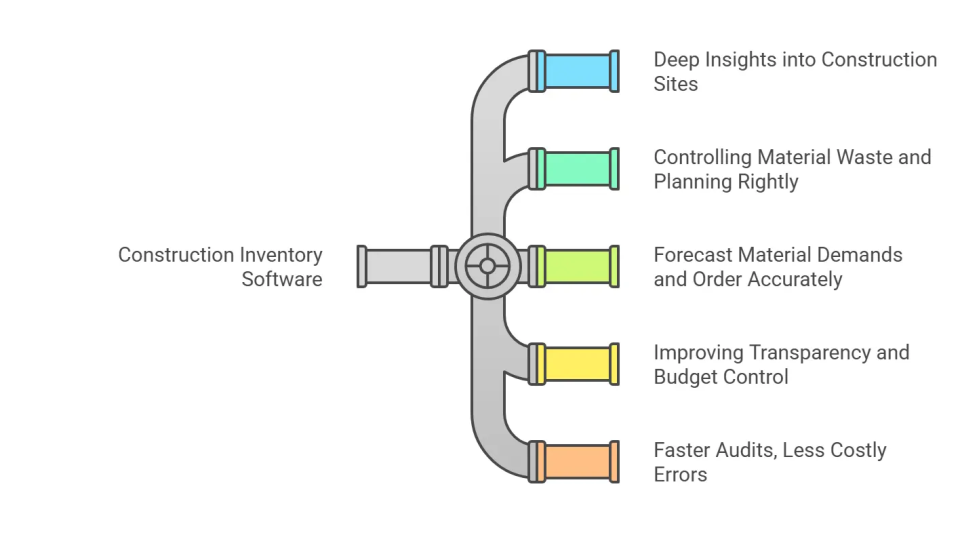
Here’s what construction teams gain when they digitize their material and equipment management:
1. Offering Deep Insights into the Construction Sites
Whether you’re handling one project or running multiple constructions, you can instantly see what materials are available, where tools are stored, and what equipment is in use without any waiting or chasing with costly surprises.
2. Controlling Material Waste and Planning Rightly
With inventory logged and traceable, materials never disappear. With inventory management software in place, every stock is counted, therefore no risk of loss.
3. Forecast Material Demands and Order Accurately
No more last-minute emergency purchases or over-ordering happen when you have inventory management software. Integrated automated reorder alerts in customized warehouse inventory management software ensure materials arrive on time and in the right quantity.
4. Improving Transparency and Budget Control
Did you know materials cost make up to 50-60% of total project cost? But it can be controlled by carefully tracking the material consumption and avoiding overspending. The software provides real-time usage analytics to help you control budget overruns.
5. Faster Audits, Less Costly Errors
With every movement recorded digitally, audits that once took days can be completed in minutes, saving time and reducing administrative pressure.
In a nutshell, using construction inventory software isn’t just about convenience. It’s about how it can help you improve delivery timelines, operational accuracy, and budget.
Key Features Every Contractor Should Consider In a Construction Inventory Tracking System
Not all tools are built the same. Every construction business is route differently and requires a system that aligns with their needs. If you’re evaluating digital construction inventory solutions, make sure the system includes features that support real-world jobsite needs.
Here are the features that you need to consider:
- The system should have tracking capabilities to provide instant updates on the movement of material.
- Should support barcode or QR scanning to replace all manual entries and errors.
- Sending stock alerts when inventory hits the pre-defined minimum levels.
- A centralized dashboard to manage multi-site construction projects.
- Capabilities to track equipment usage and schedule maintenance.
- The system should have AI-powered capabilities to suggest usage trends.
- Seamless integration with other systems to deliver a unified experience
All-in-all, the right construction materials management software doesn’t just track items- it improves planning, prevents errors, and supports growth.
Real-World Use Cases: How Contractors Benefit from Construction Management
Switching to digital construction inventory management doesn’t take months to show value; many teams see improvements as early as the first week. That’s because the biggest problems in construction inventory aren’t complicated, they’re simply unmanaged or invisible.

Here’s how contractors benefit right away when they adopt a construction inventory tracking system:
Use Case #1: Immediate Inventory Clarity with Predictive Forecasting
Before: Project managers used to walk the site or keep calling supervisors to check material availability or stock levels on the construction site.
After: With real-time construction inventory control, everyone can have instant stock visibility with:
- What stock is available
- Where it is stored
- What’s already allocated on upcoming projects
Result: With real-time visibility of stock, there is no duplication in orders, and no delays happen in delivery.
Use Case #2: Faster Material Reordering With Stock Alerts
Before: It’s common that stock runs out between mid-task. It calls for emergency purchases at higher prices or causing work stoppages.
After: Automating the reorder process with inventory management software can help you receive alerts when order levels hit the pre-defined minimum order limit.
Result: Fewer delays and reduced project downtime.
Use Case #3: Tool & Equipment Tracking Eliminates Loss
Before: Tools disappear between crews or sites, leading to repeated purchases of items the company already owns.
After: Tools are checked in/out digitally, and the system tracks:
- who used it
- where it’s currently located
- when maintenance is due
Result: Reduced theft, longer equipment life, and fewer replacement costs.
Use Case #4: Managing Multiple Job Sites Through a Single Dashboard
Before: Material movement between sites is confusing and untracked. Teams often reorder instead of transferring existing stock.
After: A centralized dashboard gives complete visibility across all sites and warehouses.
Result: Companies optimize usage and transfer materials efficiently instead of overspending.
Use Case #5: Better Budgeting and Forecasting
Before: Cost estimates rely on guesswork, memory, or outdated spreadsheets.
After: Project managers can see real-time material consumption and cost trends — making forecasts and bids more accurate.
Result: Better financial control and more competitive project pricing.
Best Construction Inventory Software in 2026 for Contractors
Here is a list of top construction inventory management software in 2026 that you can consider implementing.
| Software Name | Best For | Key Features | Why It Stands Out |
|---|---|---|---|
| GOIS (Goods Order Inventory System) | Contractors transitioning from manual spreadsheets to digital tracking | Stock updates, material tracking, barcode scanning, vendor logs, mobile ordering | Affordable, beginner-friendly, and built for on-site teams needing real-time updates across job sites |
| Procore | Large enterprise construction teams | Real-time inventory tracking, purchase order management, warehouse control, equipment check-in/out | Fully integrated construction ecosystem with automation and detailed analytics |
| Buildertrend | Residential & small commercial contractors | Material planning, supplier integrations, scheduling, budgeting | Simple UI, strong mobile access, great for improving material timelines and accountability |
| Jobber | Small contracting businesses & field service teams | Tool tracking, material scheduling, invoice sync, automated alerts | Lightweight and fast — perfect for crews who need reminders and field-friendly tracking |
| ToolWatch | Heavy construction & multi-site contractors | Asset tracking, RFID scanning, warehouse transfers, usage logs | Reduces equipment loss and speeds up field-to-warehouse tracking using RFID |
| Trimble Viewpoint | Mid-size to enterprise construction firms | Stock planning, procurement management, job cost allocation, forecasting | ERP-grade controls ideal for scaling operations and eliminating procurement delays |
| Goflow Inventory | Contractors & construction suppliers | Multi-location tracking, low stock alerts, mobile accessibility | Offers a real-time inventory visibility layer ideal for distributed teams |
| Sortly | Small and medium contractors | QR/barcode scanning, photo proof tagging, customizable logs | Extremely easy to adopt — great for companies moving away from pen-and-paper |
| Kojo (formerly Agora) | Contractors managing complex materials and procurement approvals | Supplier marketplace, order tracking, digital RFQs, insights reporting | Built specifically for fast, accurate construction procurement and vendor management |
| Upkeep | Contractors with heavy machinery + consumable parts | Maintenance tracking + inventory, asset lifecycle, spare parts management | Combines equipment maintenance and stock control — eliminating downtime costs |
Final Words
Hopefully, with this blog, you have got an idea of how a digital construction inventory management system helps you reshape the construction inventory management process. It ensures the modern way of handling, managing, tracking, and optimizing the inventory. From eliminating manual paperwork to enabling real-time visibility, inventory management software can help you automate the material planning and management process.
However, the success of inventory management depends upon investing in the right inventory management solution. GOIS can help you get customized construction inventory management software that ensures a strategic advantage – Schedule a Demo.

Naushad Ahmed 
Naushad Ahmed is a technology expert at Goods Order Inventory (GOIS) specializing in inventory management, order fulfillment, and warehouse operations for small and mid-sized businesses. He shares practical insights on inventory control, stock accuracy, automation, and multi-location management to help businesses move beyond spreadsheets, reduce stockouts and overstock, and scale their operations efficiently.