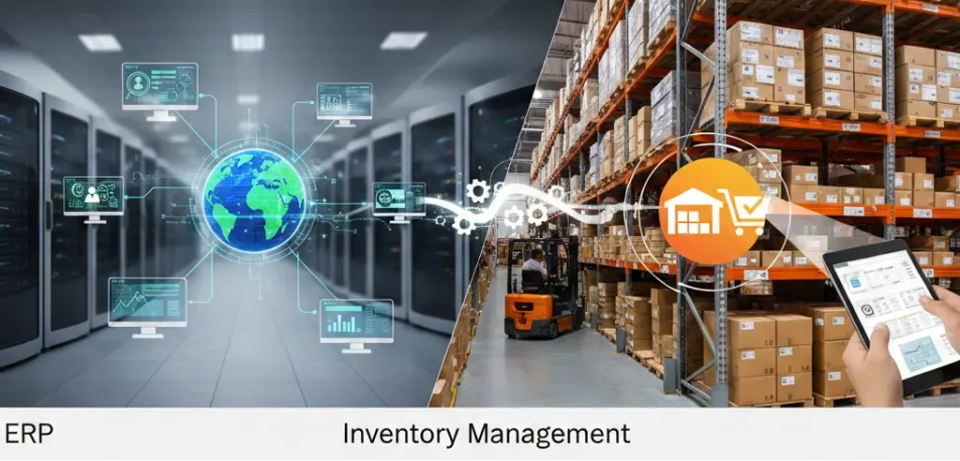
For all growing retailers, warehouses, distributors, and manufacturers, this is probably the never ending debate around ERP Vs inventory management.
If you are the one who always feels stuck between spreadsheets and complex enterprise systems and is still not able to understand whether you need an ERP or an inventory system, then this blog is for you.
Before you rush to make any decision, just keep in mind that choosing the wrong system can mean overspending, underutilizing features, or worse, which push you far away from the growth.
So when it comes to ERP vs inventory management, clarify what each system really does, their limitations and capabilities to understand how each option makes sense for your business today and tomorrow.
First, What Is an ERP?
An ERP, Enterprise Resource Planning system is a centralized platform that help connecting multiple tools of your business in a unified platform. It allows you to manage multiple aspects of your business under one umbrella.
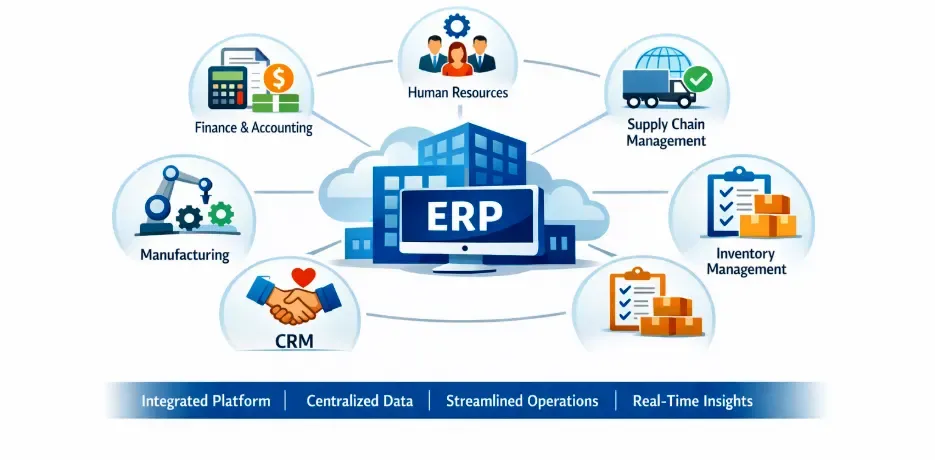
In short, ERP is an enterprise-level system that is built to run your entire business through a single command.
Now, What Is Inventory Management Software?
Inventory management software is an individual software that majorly focuses on tracking, managing, and optimizing stock levels. It’s core functionality is to manage end-to-end inventory operations.
It answers questions like:
- What’s in stock right now?
- What’s running low?
- Where is this SKU located?
- What’s the reorder point?
- What’s the turnover rate?
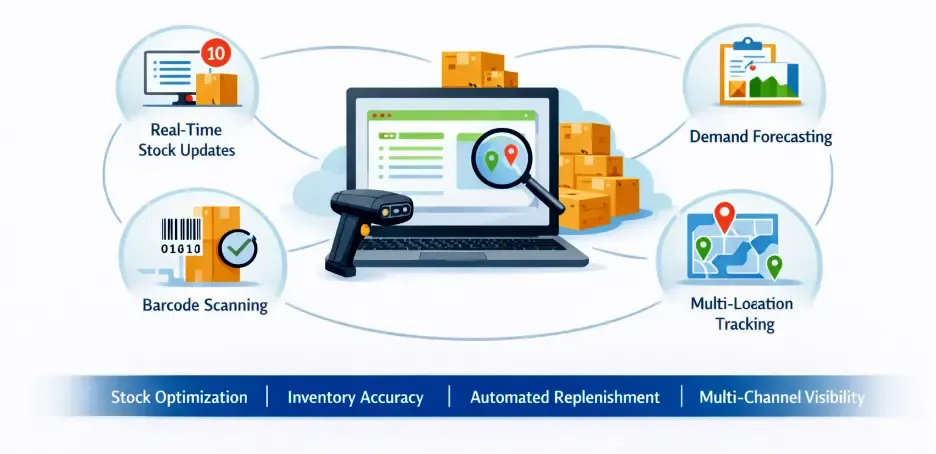
Modern-inventory management software systems like GOIS also include:
- Real-time stock updates
- Multi-warehouse visibility
- Barcode scanning or RFID support
- Demand forecasting using AI capabilities
- Automated replenishment
- Purchase order management
A peer-reviewed study of retailers implementing real-time inventory management can cut stockout rates from ~12% to ~7% (a ~42% reduction) and reduce time spent on manual stock tasks by ~35%.
Unlike ERP, inventory software is a specialized software. It goes deep rather than wide. This is where the real discussion of ERP vs inventory management begins.
ERP Vs Inventory Management: The Core Difference
Here’s the simplest explanation to hardest discussions…
- ERP is valid or working well when “Broad Business Control” is required for handling multiple systems.
- Inventory software fits well when “Deep Inventory Control” is required to manage inventory operations smoothly.
But that’s not enough to make a valid decision. Let’s compare them side by side.
ERP Vs Inventory Management: Detailed Comparison
| Feature | ERP | Inventory Management Software |
|---|---|---|
| Core Purpose | Manages entire business operations | Manages stock and warehouse operations |
| Depth in Inventory | Basic to moderate | Advanced and specialized |
| Cost | High implementation & maintenance cost | Affordable and scalable |
| Implementation Time | Months (sometimes longer) | Weeks |
| Customization | Complex and expensive | Flexible and focused |
| Best For | Large enterprises with complex workflows | Growing SMBs and mid-market companies |
| User Complexity | High learning curve | Easier adoption |
| Cloud Flexibility | Depends on the vendor | Often built for cloud-first operations |
When evaluating ERP Vs inventory management strengths and limitations, the biggest difference lies in focus. ERP spreads functionality across departments, actively handling multiple aspects of the enterprise. In contrast, inventory software focuses on empowering one critical area: stock control.
When does ERP adoption makes a real sense?
ERP systems are powerful, but they’re not always required. So, before you jump straight to implement ERP systems, you need to understand whether you
- Operate across multiple global entities.
- Require tight financial compliance and consolidation.
- Manage manufacturing, procurement, HR, and finance at scale.
- Processes are deeply interconnected across departments.
If your answer is yes to all these points, then ERP is your requirement. However, it’s important to acknowledge common ERP limitations:
- Expensive upfront pricing and upgrades
- Took long time for implementation, thus increasing complications in existing systems.
- Team trainings would be required to understand its functionalities.
- Not that deeply work for businesses focused primarily on inventory control.
- Limited flexibility for fast-changing retail or eCommerce environments, as it’s costly and time-consuming to implement any upgrades.
This is where the ERP Vs inventory management conversation becomes strategic rather than technical.
When Inventory Management Software Is the Smarter Choice
If inventory is your operational heartbeat, specialized software often delivers more value if you are looking for a system that is dedicated to handling inventory operations.
Inventory software is ideal when:
- Stock accuracy directly impacts revenue.
- You manage multiple warehouses at various locations.
- You sell through multiple channels (retail, online, and marketplace).
- You need faster implementation and deeper functionalities.
- You want lower upfront investment and lasting impacts.
With cloud inventory management, businesses gain:
- Real-time visibility of inventory from anywhere
- Automatically updates the data and cuts down the risk of working with outdated data
- Lower IT overhead asthe system is simple to access and manage
- Faster scalability and seamless integrations with accounting or POS systems
For many growing businesses, still struggling between choosing ERP vs inventory management becomes less about “Which is bigger?” and more about “Which solves our real bottleneck?”
Inventory Software vs ERP: Cost & ROI Reality Check
So till now, we have talked about the functionalities and specialised working of these systems. But the biggest decision-making factor is the cost. No matter how small or big an enterprise you are, ultimately, the question “how much to invest in the system” really matters to businesses. So let’s talk numbers.
ERP systems can cost:
- Expensive upfront licensing and implementation costs.
- Implementation consulting and complexities are high.
- Annual maintenance costs and system upgrades can put a hole in your pocket.
- Customizations are expensive to deal with.
Inventory software, on the other hand, typically :
- The pricing model is mainly based on a subscription basis.
- Has lower onboarding costs and gradually increases depending on customizations.
- Requires less training as it’s simple and easy to access.
- Delivers faster ROI by addressing direct challenges.
When analyzing inventory software vs ERP, growing companies often realize they don’t need a full enterprise system yet but they need tighter stock control.
In many cases, choosing inventory software first delays or eliminates the need for ERP.
Decision Driving Question: What Problem Are You Solving?
The smartest way to evaluate between ERP vs inventory management isn’t by feature list or cost- it’s always by understanding the business pain areas.
Ask yourself:
- Are financial processes your bottleneck? If yes, the ERP may help.
- Is stock mismanagement costing you revenue? If so, inventory software is the answer.
- Are you expanding warehouses or sales channels?, if yes, then Inventory-first approach makes sense.
- Are you planning IPO-level reporting and multi-entity consolidation?, if yes, then ERP becomes relevant.
Too often, companies jump into ERP because it “sounds scalable”, but it isn’t about size. It’s always about what problems you are planning to solve with the solution.
A Quick Conclusion:
The old assumption of enterprises was-
“ERP is advanced. Inventory software is basic.”
However, that’s no longer true. The next-gen inventory management systems are far more practical and intelligent in handling inventory-related challenges.
The debate of modern inventory management vs ERP is very different today.
Modern inventory systems like GOIS now offer:
- No assumptions and forecasting demands using AI-driven insights
- Flexibility to automate replenishment rules
- Real-time multi-location stock tracking
- Batch & serial tracking
- Integrated purchase and sales workflows
- Advanced reporting dashboards
Upgrade to Smarter Inventory Management with GOIS
Automate replenishment, track stock in real time, and gain AI-driven insights with GOIS’s modern inventory platform.
Meanwhile, many ERP systems offer inventory as just one module, often not as advanced as dedicated tools.
In the modern landscape, ERP vs inventory management is about specialization vs centralization, so make a choice wisely.
Frequently Asked Questions (FAQ’s)
1. What is the main difference between ERP vs inventory management?
ERP is a digitally designed consolidated platform that complies multiple business functionals while inventory management software focuses specifically on stock control and warehouse operations.
2. Is inventory software better than ERP?
The ultimate choice or decision is depending upon your business needs. For businesses dedicated handling inventory operations should choose Inventory system, whereas enterprises looking to simplify the management of finance, logistics, and other operations, then look for a full ERP system.
3. Can small businesses use ERP systems?
Yes, but ERP may be expensive and complex for small businesses. Many growing companies prefer starting with inventory software and switch later to ERP system while scaling.

Naushad Ahmed 
Naushad Ahmed is a technology expert at Goods Order Inventory (GOIS) specializing in inventory management, order fulfillment, and warehouse operations for small and mid-sized businesses. He shares practical insights on inventory control, stock accuracy, automation, and multi-location management to help businesses move beyond spreadsheets, reduce stockouts and overstock, and scale their operations efficiently.