
Perishable inventory management is one of the biggest challenges for businesses dealing with the products that have limited shelf or quickly lose value over time.
Whether its food, pharmaceuticals, cosmetics or other time-sensitive good- poor inventory control can lead to spoilage, waste and may be the greatest source of lost revenue.
Managing perishable inventory strategically requires more than simply tracking stock levels. Businesses must balance demand forecasting, inventory rotation, storage conditions and real-time visibility to ensure products are sold before they lose value.
By implementing the right strategies, giving special attention to perishable inventory and using the right tools- businesses can improve the bottom line.
Here in this blog guide, we will explore the best strategies and tips for controlling inventory waste and making the most of the opportunities – before to products got expired.
What Is Perishable Inventory or Perishable Stock?
The term perishable inventory or Perishable stock refers to the products that are time-sensitive or comes with expiry. In addition, some of the perishable inventory is sensitive to temperature, humidity and exposure to light.
The aging process of these stocks becomes critical with each tick of the clock- diminishes their worth. This happens in four primary ways, in different degrees:
- Gradual depreciation where product quality slowly declines.
- Step-wise degradation of the product, when the value of a product diminishes abruptly in stages.
- High-degree time-sensitivity like food, medicines available with short shelf lives.
- Instant expiration, where the value of a product instantly disappears. For example if plane departs- the airline ticket become worthless.
Perishable Inventory Vs Perishable Stock- Understanding the Difference
While perishable inventory and perishable stock are often interchangeably terms, but they are different.
The term perishable stock usually refers to the things that you can physically store with limited shelf life- like food, medicines, flowers.
The term Perishable inventory actually encompasses more than just physical goods to include intangible assets and services like laptop, Mobile Phone, air tickets and more.
Best Strategies and Tips to Perishable Inventory Management

- Prioritize Implementing FIFO (First In, First Out)
The FIFO method- first in, first out is the golden rule to manage Perishable inventory. This means, the older stock is either sold or used before the newer is entering to the warehouse.
Why FIFO Works Excellently?
Items are dispatched in order they are received. Here’s how it benefits:
- Minimizes the risk of products expiring before they are sold.
- Less risk of inventory carrying cost.
- Better stock movement and rotation of goods.
- Enables you track inventory to avoid overstocking.
2. Using FEFO (First Expired, First Out) Method
While FIFO remains an excellent for inventory management for some businesses, but warehouses dealing in Perishable inventory often benefit more from FEFO methods in certain scenarios.
Under FEFO, the products that are close to expiry date are used or sold first, no matter when they arrived in the warehouse. This ensures inventory is moving and rotating based on the shelf life rather than depending on receiving dates.
Why FEFO works better for Perishable Inventory Management?
- Higher chance of clearing products before they expire.
- Controlling inventory waste and intelligently managing spoilage cost.
- Maximizing the shelf life of remaining stock.
- Help maintain product quality.
3. Track Inventory in Real-Time
Get a true picture of your inventory that has limited shelf life. This is where real-time tracking of perishable inventory is plays a critical role. It allows businesses to keep an eye on stock levels, product movements, batch information and expiration dates.
Invest in next-gen solutions like GOIS cloud-based Order and Inventory Management System, which provides complete inventory visibility of inventory. It allow businesses to identify the products sitting at high risk and enables them make faster decision.
It adds value in different ways:
- Improves visibility into inventory levels and movement.
- Help preventing losses from expired or aging stock.
- Reduces overstocking and stock shortages.
- Providing better control over inventory
- Supports faster decision-making
4. Smart Demand Forecasting
Overstocking is the biggest reason behind perishable inventory management failure. When you started storing the inventory levels more than the actual customer demand, probably your products start spending more time in storage and more likely to expire before they sold.
However, intelligent demand forecasting can help allow businesses to match the inventory levels with real demands.
For this, it’s worth investing into intelligent inventory management solutions that help analyzing the historical sales data, understanding the latest trends and focusing on demand patterns.
Better forecasting translates into right stock levels without holding the excessive inventory.
Benefits of smart demand forecasting
- Minimizes the chance of overstocking and inventory waste
- Reduces carrying and storage cost
- Prevents stockouts during peak demands
- Supports smart replenishment decisions
5. Auditing Inventory At Frequent Intervals
Are you totally relying on tech-driven systems for managing time-sentive perishable products? You might be mistaken, because even the advanced systems can create errors if there are handling errors, damaged goods or inventory shrinkages.
This is where it is important to conduct regular inventory audit to deeply compare physical stock against inventory records. This will help identifying the inventory that is going unnoticed or may drain revenue at the end.
Here’s how it benefit the system:
- Identify inventory issues before they turn into blunders
- Uncover damaged or hidden stock.
- Strengthens inventory accountability across teams.
- Helps uncover storage and handling issues.
- Supports more reliable inventory planning.
Perishable Inventory Management with GOIS
A single missed expiration date may not seem like a major issue, but when you are managing hundreds or thousands of SKUs across multiple locations- even a small inventory mistake can lead to blunders.
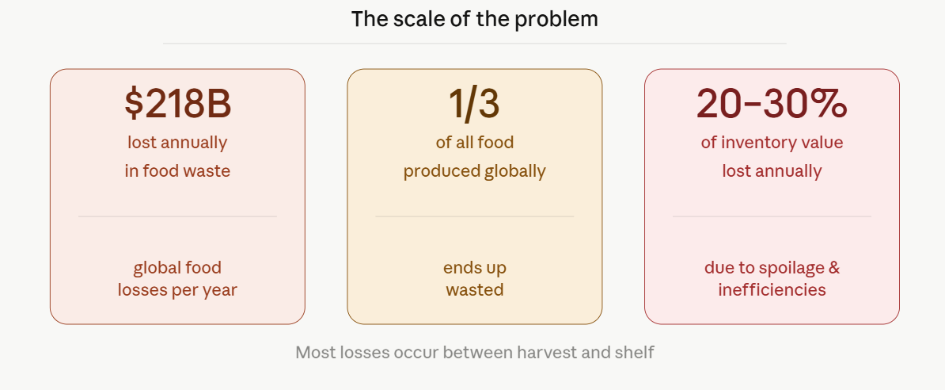
Research shows that businesses can lose up to 20-30% of inventory value annually due to overstocking, spoilage, stock inaccuracies and inefficient processes. For businesses handling perishable goods, the impact can be even greater because every unsold product has a limited window to generate revenue.
This is where technology makes a measurable difference. Learn here- how GOIS helps manage perishable inventory…
GOIS equips businesses with the tools needed to manage perishable inventory more effectively. Here’s how:
- Inventory Tracking to bring real-time visibility, inventory movement and product availability across multiple locations.
- Centralized Inventory Visibility to identify ageing inventory faster and reducing overstocking of time-sensitive products.
- Inventory Alerts and Notifications to help teams act quickly on low stock levels, unusual inventory movements or inventory exceptions.
- Automated Replenishment Planning to maintain optimal stock levels and reduce overstocking of time-sensitive products.
- Multi-Location Inventory Management to redistribute inventory at the specific locations depending upon the product expiry.
Final Words
Managing perishable inventory requires a strategic planning and right execution. Businesses must carefully balance inventory availability, shelf life, demand and storage conditions to prevent unnecessary waste and lost revenue.
By implementing top strategies for Perishable inventory management like FIFO, FEFO, inventory auditing, accurate demand forecasting- businesses can control stock waste.
Solutions like GOIS further strengthen perishable inventory management by providing real-time visibility, automated replenishment, inventory analytics and centralized inventory control- helping businesses make smarter decisions before inventory becomes a liability.
FAQs
What are the best practices for managing perishable inventory?
The best practices for managing perishable inventory includes- implementing FIFO (First In, First Out) methods, FEFO (First Expire, First Out) strategy, inventory auditing, investing in right technology, tracking inventory in real time and more. These proven perishable inventory management strategies help you deliver quality products, reduces waste and maintaining higher customer satisfaction.
What is Perishable Inventory Management?
Perishable inventory management is refers to the process of inventory management in situation where products are time-sensitive or having limited shelf life. Mindful management of perishable stock involves the practicing of matching the supply with demand to avoid overstocking.
Why is GOIS a top choice for Retailers for managing perishable inventory?
GOIS Order and Inventory management system is a top choice for retailer for managing perishable inventory because it offers all the tools needed to manage stock in grocery stores operating at the multiple locations. From mobile capabilities to robust reporting to real-time inventory visibility- its an ideal solution for retailers looking to optimize perishable inventory management.

Naushad Ahmed 
Naushad Ahmed is a technology expert at Goods Order Inventory (GOIS) specializing in inventory management, order fulfillment, and warehouse operations for small and mid-sized businesses. He shares practical insights on inventory control, stock accuracy, automation, and multi-location management to help businesses move beyond spreadsheets, reduce stockouts and overstock, and scale their operations efficiently.