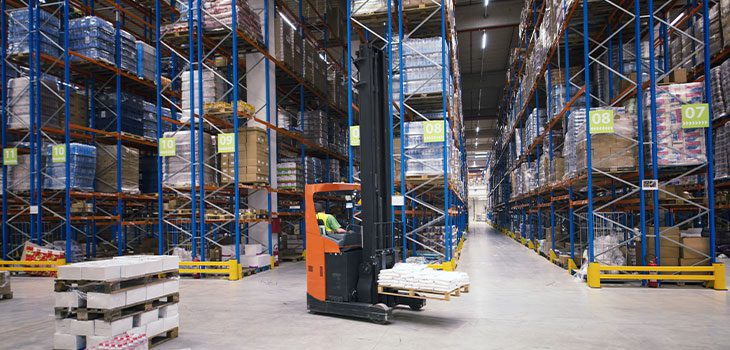
If your business handles manufacturing, distribution, consumables, or regulated products, there are higher chance that you have faced operational challenges such as
- Inability to trace defective products to a specific batch
- Challenge in managing expiration-based inventory
- Lack of visibility across multiple warehouses
- Compliance risks during audits or inspections
These issues are not minor operational gaps. They are invisible revenue leakages that directly impact brand credibility and regulatory standing. Implementing structured lot numbers enables companies to gain traceability, compliance readiness, and operational control.
Manage Every Batch with Confidence
Track lot numbers, expiry dates & dispatch order — all in one place with GOIS.
Get Started with GOISIf you are all set to structure the inventory management process, then let’s understand what lot numbers are, why they matter, and how to implement them correctly.
What is a LOT number?
Lot numbers are unique identifiers of batch codes that are assigned to the specific product batch, which share common production characteristics. These characteristics typically include product manufacturing date, production line, processing facility, or raw material source.
Organizations apply a common lot number to things produced under comparable conditions rather than recording each unit separately. This method preserves operational effectiveness while streamlining traceability.
For instance, a manufacturing facility is given a single lot number if it produces 20,000 units of any cosmetic product in a single day using the same facility and formulation. For the purposes of tracking, quality control, and recall, that identity connects those units.
In a nutshell, lot numbers allow businesses to trace products in batches across the production lifecycle.
Why Lot Numbers Are Essential in Inventory Management
The accuracy of inventory tracking depends upon the accuracy and traceability of the product lot. With a structured batch tracking system, businesses can operate proactively in any situation. Here’s how lot numbers are aiding in inventory management:
1. Controlled and Targeted Product Recalls
One of the primary roles of using lot numbers is it provides the ability to conduct precise product recalls.
In any case, if any defect or contamination issue arises, then business can take immediate action and able to isolate the affected product batch rather than recalling the entire product line. With this you can control financial loss, protects consumer safety and maintains brand integrity.
Without have a lot number on products, your recall efforts will be far broad, expensive and often damaging to customer trust.
2. Improved Expiry and FIFO Management
For businesses dealing with timeline sensitive products or regulated goods, tracking expiry of the product is critical.
When you have lot numbers mentioned on the product batch organizations are allowed to:
- Implement First-In, First-Out (FIFO) strategy accurately
- Monitor product batch’s by it’s shelf life
- Minimize the risk of having expired or obsolete stock
- Maintain product freshness and safety with constant tracking
Using the well-structured approach of monitoring expiry date sensitive products can help minimize the waste while ensuring the compliance with quality assurance.
3. Products Are Always Audit Ready
Industries such as food and beverage, pharmaceuticals, cosmetics, medical devices, and chemical manufacturing often produce products with limited shelf life. They often required traceability of the product batch.
To control the quality standards, regulatory authorities may request detailed production records, including:
- Manufacturing date
- Production facility
- Distribution history
- Batch identification
This is where finding each product manually is a challenge. Therefore, lot numbers are used to provide a framework for meeting these requirements. With them, demonstrating the companies details to regulatory becomes significantly far simpler and easy.
4. Complete Product Supply Visibility At All Phases
Usually the supply chains involve multiple stakeholders, locations, and handoffs. This is where product batches having a lot numbers allow organizations to have complete traceability across each stage.
With proper tracking systems in place, businesses can trace products from:
“Raw material procurement – Production – Warehouse storage – Distribution – Retail sale”
This level of visibility supports quality control, supplier accountability, and faster issue resolution.
How to Find Lot Numbers on Products?
Businesses and consumers often ask where these lot numbers are mentioned and how to find lot numbers on a product batch.
Lot numbers are usually printed around the standardized areas, such as:
- Sometimes adjacent to the barcode
- Near the SKU identifier
- Close to the manufacturing or expiry date
- On the bottom of the packaging
- On outer cartons for bulk shipments
In pharmaceuticals and cosmetics, they are commonly printed alongside manufacturing and expiration details. In electronics, they may appear on product labels or packaging inserts.
They are generally printed in alphanumeric codes and are internally designed or structured according to the manufacturer’s rules.
How to Read Lot Numbers on Product Batches?
When it comes to the discussion of “Lot Numbers”, another frequent question that is usually asked is how to read lot numbers effectively.
However, there is no universal formatting standard for lot numbers. Each organization has different patterns and defines its own structure based on operational needs. However, most lot numbers are logically encoded and may include:
- Indication of production date
- Codes of the manufacturing plant
- Product category identifiers
- Batch sequence numbers
For example, a lot number may include a date segment that represents the manufacturing day, the facility used, and the production line reference.
The simple logic used to draft lot numbers aligns with its internal consistency. Once a format is fixed, it must be uniformly applied across all production cycles. This ensures clarity during audits, recalls, and inventory checks.
How to Implement Lot Numbers in Your Operations?
The successful product batch tracking and monitoring is majorly depending upon the fact that how you implement the lot numbers. Here’s how you can structure the lot number:
So, firstly, you need to define a clear format that reflects all the relevant production data, such as date, location, and product code. The structure should be scalable and easy for internal teams to understand and follow.
Second, lot numbers need to be assigned at the correct phase of the operational stage—either during manufacturing or upon receiving goods from suppliers.
Third, make sure your inventory management software synchronizes and incorporates lot tracking. The possibility of data entry errors and traceability gaps is greatly increased when tracking manually using spreadsheets.
Lastly, make sure lot numbers are noted throughout sales and dispatch. Mapping batch data to invoices ensures that, if necessary, affected customers can be identified quickly.
Common Challenges of Implementing Lot Numbers
While the concept of drafting and implementing the lot numbers is straightforward, but sometimes it fails due to:
- Inconsistent formatting
- Manual data entry errors
- Lack of staff training
- Mixing batches within storage locations
- Failure to capture lot details during outbound shipping
Structured digital tracking systems significantly simplify the process of product batch monitoring and improve operational reliability.
Final Words
Lot numbers are not actually administrative codes, but they are foundational codes; they are a foundational element to improve traceability, compliance, and risk management of the product batch.
The well-structured and implemented lot numbers support recalls, expiry tracking, compliance and quality control. You can have better end-to-end supply chain visibility.
In increasingly regulated and competitive markets, businesses cannot afford to operate without reliable batch tracking systems. Implementing structured lot number management is a strategic decision that enhances operational control and long-term resilience.

Naushad Ahmed 
Naushad Ahmed is a technology expert at Goods Order Inventory (GOIS) specializing in inventory management, order fulfillment, and warehouse operations for small and mid-sized businesses. He shares practical insights on inventory control, stock accuracy, automation, and multi-location management to help businesses move beyond spreadsheets, reduce stockouts and overstock, and scale their operations efficiently.