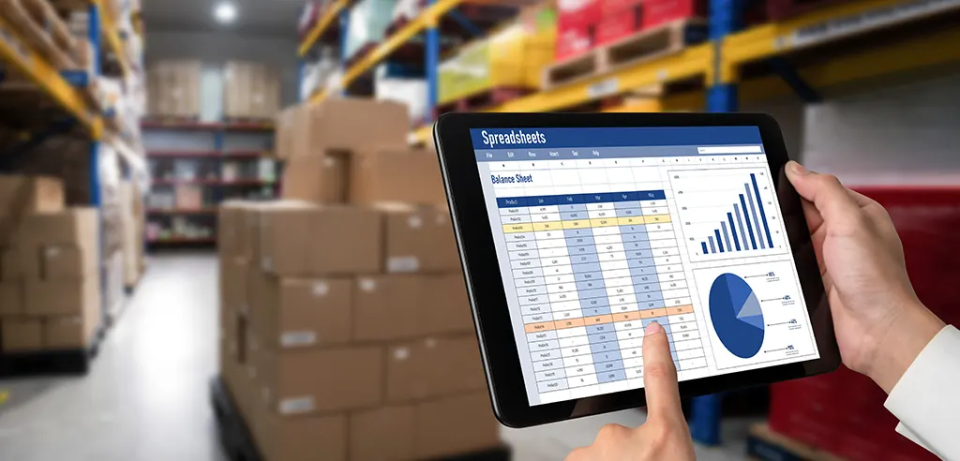
However, the central question is, are inventory management spreadsheets scaling with your business expansion?
This is where inventory management spreadsheets can quietly become a major operational bottleneck. Ideally, inventory spreadsheets work well when you have a small product list and limited inventory to track. But as order volumes increase, these spreadsheets quickly lead to inefficiencies, inaccuracies, and missed opportunities as order volumes increase.
Inventory is constantly moving, and sales, returns, transfers, and replenishments happen every minute. Spreadsheets are not designed to handle this level of operational complexity. This ultimately slows down the operations and limits your business growth.
5 Ways Inventory Management Spreadsheets Are Hurting Your Business Growth
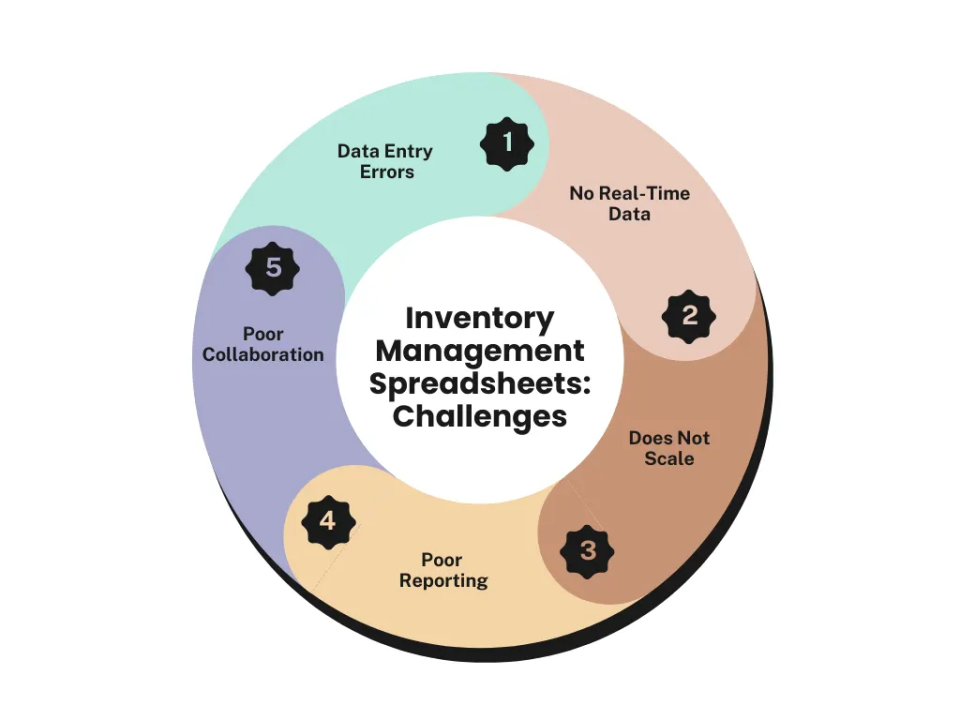
1. Higher Risk of Data Errors with Manual Data Entry
One of the biggest risks of using the Inventory Management Spreadsheets is their reliance on manually entering the data.
Every update, whether it’s a sale, restock, or adjustment, must be typed into the sheet manually. This process increases the chances of:
- Incorrect numbers
- Missing updates
- Broken formulas
- Duplicate entries
Studies show that even carefully maintained spreadsheets often contain errors because humans must manually update them. These mistakes can end up your teams working with wrong data, that and leading to financial discrepancies.
A single incorrect entry can lead to:
- Overselling products that are out of stock
- Overstocking slow-moving items
- Incorrect purchase planning
- Lost revenue
As businesses scale, these small mistakes can turn into major operational disruptions.
2. No Real-Time Data Update and Lack of Inventory Visibility
Inventory keeps moving throughout the day. Products are constantly sold, returned, shipped, or moved between locations. With so many shipping movements, spreadsheets are hard to maintain with every single inventory update.
Inventory Management Spreadsheets only reflect the last time someone updated them. This means the data you see is often outdated, which leads to these serious inventory challenges:
- Stockouts caused by delayed updates
- Overselling products that are already gone
- Incorrect fulfillment decisions
- Poor customer experiences
Spreadsheets essentially provide a snapshot of inventory, not a live view of stock movement. So in the fast-moving industries like ecommerce, retail, or logistics, this delay can directly impact revenue and customer satisfaction. Even seemingly unrelated tasks, such as when businesses design logos for new product lines or brands, can become harder to coordinate when product information and inventory data are scattered across outdated spreadsheets.
3. Spreadsheets Do Not Scale With Business Growth
What works for managing 50 products often collapses when managing 5,000.
As businesses grow, inventory becomes more complex. Companies may operate with:
- Multiple warehouses
- Multiple sales channels
- Larger SKU catalogs
- Higher order volumes
Unfortunately, Inventory Management Spreadsheets are not built to handle this complexity. Large files become slow, difficult to manage, and prone to formula errors.
As product catalogs expand and transactions increase, spreadsheets become increasingly difficult to maintain and navigate.
Instead of enabling growth, the spreadsheet hurts your business growth.
4. Poor Inventory Reporting and Business Insights
Spreadsheets can just show you basic numbers. Businesses can’t derive meaningful insights from those numbers.
To generate meaningful insights, teams must manually build formulas, pivot tables, and reports, which is a time-consuming and unreliable process.
Without strong analytics, businesses struggle to answer key questions like:
- Which products sell the fastest?
- Which SKUs are slow-moving?
- When is the right time to reorder inventory?
- Which are the most reliable suppliers?
Spreadsheet-based inventory systems make it difficult to analyze trends or forecast demand effectively.
As a result, decision-making often becomes reactive rather than strategic.
5. Poor Team Collaboration and Data Security
No matter whether you have well-maintained inventory spreadsheets, inventory management relies on connected systems. It typically involves multiple teams, including warehouse staff, procurement teams, finance departments, and sales teams.
Inventory Management Spreadsheets were never designed for large-scale collaboration. You may start noticing these challenges:
- Having multiple versions of the same file
- Updates are overwritten
- Conflicting data entries
- Limited access control
Spreadsheets also lack robust security controls and can be accidentally deleted or corrupt or accessed by an unauthorized user.
Why Businesses Are Shifting From Inventory Management Spreadsheets
Spreadsheets may work in the early stages of a business, but they are not built to support modern inventory operations.
With the increasing complexities of inventory management, growing businesses are in urgent need of order and inventory management systems that can offer:
- Real-time inventory tracking
- Automated stock updates
- Multi-location inventory visibility
- Smart reorder alerts
- Integrated analytics and reporting
- Seamless collaboration across teams
This is where the GOIS Next-Gen Inventory Management System ensures a seamless transition from inventory spreadsheets to modern inventory management platforms.
Upgrade From Spreadsheets to Smarter Inventory Management with GOIS
If your business is looking for a quick transition from an inventory spreadsheet without disrupting the existing workflow, then choosing GOIS can be a smart decision.
GOIS provides a modern inventory management solution designed to eliminate the limitations of spreadsheets by offering:
- Real-time inventory tracking and broader visibility
- Automated stock updates and trigger reordered
- Smart analytics and reporting
- Multi-location inventory management
- Seamless operational visibility
Instead of managing inventory manually, businesses can focus on scaling operations, improving accuracy, and making smarter inventory decisions. – Schedule a Demo
Final Words
Gone are those days when businesses were relied on Inventory Management Spreadsheets. They might seems easier to access but now from started businesses emphasis on scalability, therefore they look for modern systems that supports automatic real-time data updates, valuable insights, connected platforms and more.
Solutions like GOIS help companies move beyond spreadsheets by delivering real-time inventory control, intelligent reporting, and scalable inventory infrastructure that supports long-term business growth.
If your business is still relying on Inventory Management Spreadsheets and looking for smart ways to transform it, then contact us for an intelligent inventory management solution.
Frequently Asked Questions (FAQ’s)
1. What are Inventory Management Spreadsheets?
Inventory Management Spreadsheets are manually managed excel sheets where businesses manually enter data related to inventory.
2. Why are inventory management spreadsheets hurting business growth?
Inventory Management Spreadsheets may sound simple to access and manage, but when your business starts growing, the complexity and performance gaps are begin to visible in spreadsheets. They lack scalability, don’t provide valuable insights, lead to poor decision making with no real-time visibility to inventory.
3. What are the biggest limitations of Inventory Management Spreadsheets?
The major limitations of Inventory Management Spreadsheets include:
1. Manual data entry errors
2. Lack of real-time inventory updates
3. Difficulty managing large product catalogs
4. Limited reporting and analytics
5. Collaboration challenges across teams
These limitations can slow down operations and restrict business growth.
4. When should businesses move beyond Inventory Management Spreadsheets?
Businesses should consider upgrading from Inventory Management Spreadsheets when they start experiencing issues such as frequent stock discrepancies, overselling products, slow inventory updates, or difficulty managing inventory across multiple locations.
5. How does GOIS improve inventory management compared to spreadsheets?
GOIS replaces Inventory Management Spreadsheets with an automated inventory system that offers:
1. Real-time inventory tracking
2. Automated stock alerts
3. Centralized inventory data
4. Advanced reporting and analytics
5. Multi-location inventory visibility

Naushad Ahmed 
Naushad Ahmed is a technology expert at Goods Order Inventory (GOIS) specializing in inventory management, order fulfillment, and warehouse operations for small and mid-sized businesses. He shares practical insights on inventory control, stock accuracy, automation, and multi-location management to help businesses move beyond spreadsheets, reduce stockouts and overstock, and scale their operations efficiently.