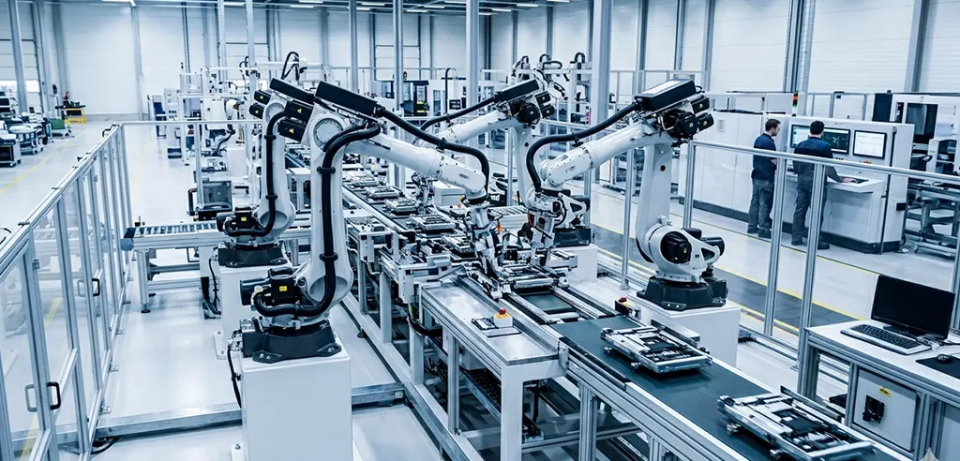
The truth is, automation is no longer a glitzy trend in the factory; it is a matter of course. Go to any serious place and walk into a facility, and you will come across robots, sensors, and software doing the work that there was a whole crew for that could only do the same job a few years ago. However, this is where people miss out on the detail that technology is normally that which is easy. The strategy is what has a way of getting people down.
From raw materials to finished goods — full control in one dashboard
GOIS gives manufacturers real-time visibility across every production stage. Track WIP, manage BOMs, automate reorders, and eliminate costly stockouts — all without switching tools.
We even discussed the matter with the plant managers who had invested millions of dollars in automation in manufacturing and nearly did not notice any difference. In the meantime, I have seen small shops with smaller budgets totally transform the game for themselves. What separated them? Simple. Those who made it correct knew what problem they wanted to fix before purchasing anything.
Start with the bottleneck, not the brochure.
All automation salespeople create an ideal, idyllic, picturesque view of lines with no mistakes or errors, machines working, and the lights off. You cannot help but be carried away. But before you clothe anything with your signature, visit your plant. Be cautious and observe where the pace is relatively slow, where errors are accumulating, and where you have skilled workers who are struggling with a job that, frankly, does not require their expertise.
You have that as your roaring point. Automation in manufacturing is profitable when you do not slap a bottleneck everywhere, but rather at a real, quantifiable bottleneck. Locate the chokepoint with maximum gain, and use the same value to scale.
Recommended Reading: https://www.linkedin.com/pulse/why-core-inventory-matters-how-manage-like-vckfc/
Automation is not opposed by your workforce.
Be realistic: Not every automation project unravels due to the machines. It’s usually people. Workers are not connected when threatened. Issues are not identified at an early stage, and instead, individuals work around the system rather than through it.
The smartest manufacturers? They view the automation as a means of investing in people, rather than replacing them. Everything becomes different as employees observe machines being given boring and physically demanding jobs as they are being trained to oversee and enhance new systems. The resistance becomes ownership. Believe me, it is a more worthwhile change than a spreadsheet forecast.
Goods Order Inventory: the overlooked backbone of automation in manufacturing
You might as well end up throwing money away, having the flashiest line out there when you have chaos in your inventory. This is underestimated by most manufacturers when implementing automation. The machines maintain their time. The orders don’t.
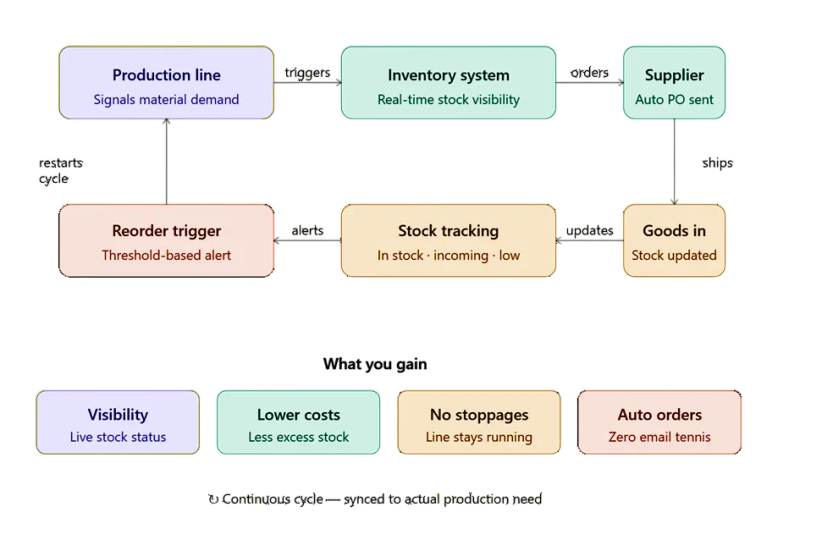
A Goods Order Inventory System renders tangible discipline to your supply chain. Stop counting boxes manually, playing with spreadsheets, or just making an educated guess. What you do see are all that are in stock, those that are coming in, and those that are running low, synchronized to your production needs. That is, no unexpected out-of-stock closing a line and no crammed shelves consuming your money.
This is what you receive:
- Real-time stock visibility: Understand what is available, ordered, and out of stock in real time.
- Reshuffling: According to actual necessity, rather than an estimated calendar.
- Reduced carrying costs: Less money invested in additional stock, more space available.
- Automated purchase orders: Suppliers receive what they require, at the appropriate time, without the tennis match via email.
Consider it: Your production line communicates with your inventory system; it’s all just clicks. Machines do not wait till materials come. Orders are shipped on time. It is not luck that a related operation does.
Automation is the actual output of data.
Automation nowadays does not only involve the transportation of goods. It has to do with creating data, tons of it. Sensor readings, reject rates, and everything else inform you of something significant. All this info is gathered by a lot of plants. Very few use it.
Get your automation established with a real look and feel. Be aware of what numbers count. A good starting point is OEE (Overall Equipment Effectiveness); however, construct dashboards that people visit. Simply replacing the time spent repairing the things that have broken with the time spent avoiding their breakdowns can reduce the time spent by nearly half during the first year. But when your operations information is linked to inventory, then you begin to notice shortages and preempt them before they foul your schedule.
Choose interoperability over convenience.
Getting locked into one vendor is a silent killer. Sure, buying everything from one place feels simple: one contract, one number to call. But what happens when their vision heads in a different direction or you outgrow their stuff? Now you’re stuck.
Push for open systems. Ask up front how new automation plugs into your existing ERP, MES, or SCADA, especially how your inventory connects. It might be a little more work to set up, but you get the freedom to upgrade, swap out, or scale without rebuilding everything in a few years.
Pilot small-scale rise.
Automating everything is one of the largest traps to fall into. Rather, choose one line or cell. Do it right. Track everything. Fix what breaks. Then copy what works.
A strong pilot gets a reputation with all operators, maintenance, and leadership. Once individuals have been shown actual outcomes of a live test, the subsequent investment becomes an even easier sell.
Conclusion
Automation victory does not lie in the possession of the latest gadgets on your floor. It is not just about choosing the correct tools for the largest issues and taking your workforce and systems with you, such as a tight goods order inventory structure to make the supply chain buzz.
The champions at this arena are not the ones who are throwing the largest sums of money. They begin by having a clear problem, bringing everyone on board, ensuring the inventory is honest and allowing the data to inform their next step. No secret formula; it is merely doing the job. And that is where the competitive advantage begins.
Now we are ready to go. You can be a beginner, or you may need of trimming down your inventory, and we can demonstrate what you can do. – Schedule a demo.
Frequently Asked Questions (FAQ’s)
What is automation in manufacturing?
Automation in manufacturing is the use of technology like robots, AI, and software to perform production tasks with minimal human intervention. It helps manufacturers increase efficiency, reduce errors, and maintain consistent product quality while lowering operational costs.
What are the benefits of automation in manufacturing?
The key benefits of automation in manufacturing include higher productivity, lower labor costs, improved quality, and faster production cycles. It also enables real-time monitoring, reduces human error, and helps businesses scale operations efficiently.
How does automation in manufacturing improve efficiency?
Automation in manufacturing improves efficiency by streamlining workflows and reducing manual tasks. It increases production speed, minimizes downtime, and ensures consistent output through real-time data tracking and process optimization.
What technologies are used in automation in manufacturing?
Automation in manufacturing uses technologies such as industrial robots, IoT sensors, AI, and ERP systems. These tools help automate repetitive tasks, collect real-time data, and improve decision-making across production processes.
Is automation in manufacturing suitable for small businesses?
Yes, automation in manufacturing is suitable for small businesses through scalable and cloud-based solutions. It allows companies to start with basic automation and expand over time, improving efficiency without large upfront investments.

Naushad Ahmed 
Naushad Ahmed is a technology expert at Goods Order Inventory (GOIS) specializing in inventory management, order fulfillment, and warehouse operations for small and mid-sized businesses. He shares practical insights on inventory control, stock accuracy, automation, and multi-location management to help businesses move beyond spreadsheets, reduce stockouts and overstock, and scale their operations efficiently.