In the new era, spreadsheets are breaking; manual tracking with fluctuating orders is no longer reliable and is even slowing teams down.
And “the most commonly used assumption-based ordering” is quietly draining profits.
If you’re a small business owner, you already feel it.
Too much inventory on shelves ties up cash. Empty shelves lose customers and seasonal sales. And inaccurate inventory? That creates stress no one signed up for.
If being a small business owner, you are operating in a dilemma, then here’s a reality check for you…
Studies show that nearly 43% of small businesses still don’t track inventory in real time, and businesses with poor inventory visibility can lose up to 10-15% of annual revenue due to stockouts, overstocking, and human error.
The Future of Inventory Management
Learn how mid-sized enterprises are using real-time data, forecasting, and automation to reduce stockout.
Get Your Free GuideInventory management may sound simple at first to many, but today it isn’t just about counting products. It’s about knowing what you have, where it is, and what you need to prepare to meet the future demands.
In 2026, small businesses are expected to move faster, sell across more channels, and meet customer expectations that were once reserved for large enterprises. This is the shortest and smartest way of paving your movement.
The good news is?
To meet these changing requirements, you don’t need enterprise-sized budgets to manage inventory like a pro anymore.
With the right inventory management best practices and smarter systems like GOIS, small businesses can easily get the real picture of their inventory, improve cash flow, fulfill orders faster, and scale without mess.
What is Inventory Management Mean Today
For many, the concept of inventory management seems straightforward – counting on what stock we have for each product we sell. Modern inventory management best practices go beyond counting stock and focus on real-time visibility, accurate forecasting, and smarter decision-making.
Sounds simple, right? In reality, this is where many small businesses collapse.
At its core, inventory management answers three critical questions:
- What do I have right now?
- Where is it located?
- When should I reorder, or stop ordering?
“In 2026, inventory management goes far beyond counting products on shelves. It connects sales data, supplier timelines and their performance, customer demand, storage costs, and fulfillment speed into one continuous flow of information to succeed.”
According to industry data, businesses that adopt structured inventory management systems experience:
- 20-30% lower carrying costs
- Up to 25% fewer stockouts
- Faster order fulfillment by 15-20%
As supply chain expert Bernard Marr puts it:
“Inventory is cash sitting on shelves. The better you manage it, the more cash you free for growth.”
Now that we’ve defined inventory management, let’s look at why it matters so much for small businesses, especially in 2026.
Why Inventory Management for Small Businesses Is Important
Inventory management is not a “back-office task” anymore. For small businesses in 2026, it directly impacts cash flow, customer experience, and scalability. Adopting the right inventory management best practices directly impacts cash flow, customer satisfaction, and long-term scalability for small businesses.
Let’s break this down in simple terms.
Every product sitting in your warehouse, store, or fulfillment center represents money that isn’t moving. On the flip side, every out-of-stock item represents revenue you’ll never recover.
According to recent industry reports:
- Retailers lose nearly $1.8 trillion globally each year due to overstocking and stockouts
- Small businesses with poor inventory control face up to 30% higher operating costs
- Customers are twice as likely to switch brands after just one stockout experience
For small businesses, these losses hurt more because margins are tighter and resources are limited.
Quick takeaways:
- Inventory errors directly hit profit margins
- Stockouts damage trust faster than pricing issues
- Poor inventory decisions scale losses, not growth
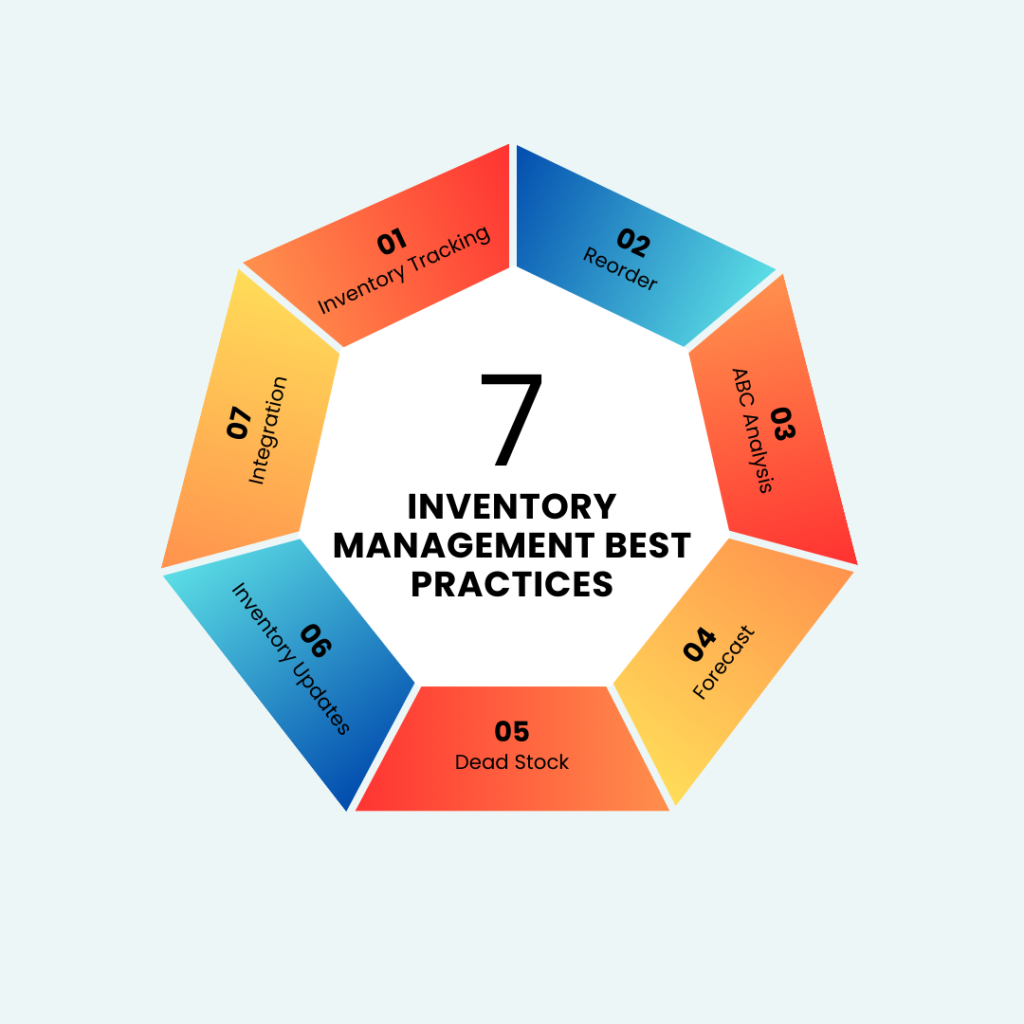
7 Inventory Management Best Practices for Small Businesses in 2026
Let’s break down the top strategies to manage inventory more strategically, rather than heavily investing straight into customizing the legacy process or adopting the enterprise-grade system.
The following inventory management best practices help small businesses reduce inventory waste, prevent stockouts, and scale operations efficiently in 2026.
1. Replace the Inventory Tracking Process with Real-Time Synchronization
In 2026, if your team is operating with delayed inventory data, then you are working with outdated data where there is a stock level update with each product sale. If the data is not extracted instantly after every sale, return, or transfer across all channels, then you are at high risk. Learn more about inventory tracking process here.
Real-time synchronization is one of the most critical inventory management best practices for reducing inventory errors.
Quick Tip: This is where GOIS acts as a centralized platform that compiles data from all across the channels and warehouses and provides teams a consolidated view of inventory that automatically updates with every single movement of stock.
2. Set a Clear Reorder Trigger for Every SKU
Reordering based on memory or assumptions leads to overbuying or panic purchases. Define minimum stock levels for each item based on sales velocity and supplier lead time.
Quick Tip: GOIS provides you with complete flexibility to set reorder alerts for each product, depending upon the demand, and remove all guesswork from purchasing.
3. Prioritize High-Value and Fast-Moving Items (ABC Analysis)
Not all products deserve equal attention. Conduct an ABC analysis to classify inventory based on value and movement, allowing small businesses to focus on items that drive revenue and increase cash flow.
Quick Tip: Using the GOIS system, teams can have a clear view of stocks that are selling fast and which are lying on shelves longer.
4. Forecast Demand Using Data, Not Assumptions
Past sales trends, seasonal patterns, and promotions should guide future inventory decisions. Even simple data-backed forecasting can reduce excess stock by 20–25%. Data-driven forecasting remains one of the most effective inventory management best practices for managing demand and controlling excess stock.
Quick Tip: The GOIS system uses advanced intelligent data analysis to analyze which products are selling fast and what is relying on shelves, and accordingly predict future demands.
5. Reduce Dead Stock Before It Becomes a Loss
Unsold inventory not just eats up your space, but also silently blocks cash. Identify slow-moving items early and act, discount, bundle, or phase them out.
Quick Tip: Dead stock is money that stopped working. This is where GOIS systems help you keep a smart track on low-moving inventory and enable you to take quick action upon those products.
6. Automate Inventory Updates With Every Single Stock Movement
Most small businesses are still relying on spreadsheets and manually entering each stock, which increases errors and slows down operations. Automation syncs inventory with sales, procurement, and fulfillment in real time.
Quick Tip: In the GOIS system, every stock is recorded by using barcode scanners to minimize the risk of having mistakes and save time.
7. Integrate Inventory with Sales and Order Management
Inventory should not live in isolation. When inventory connects with orders and sales channels, fulfillment becomes faster and more reliable.
Quick Tip: Disconnected systems create broken promises. Therefore, GOIS is customized in a way to integrate with other systems like ERP, financial, procurement and more.
Final Words
The above listed inventory management best practices for small business owners in 2026 are no longer about “staying organized.” Rather, they are about staying profitable, future-ready, and competitive.
The way customers are changing buying behaviour, the speed of fulfillment has increased and the margin for inventory mistakes has almost disappeared.
Small businesses that treat inventory as a strategic asset, not a background tasks are winning in 2026. They carry the right stock, avoid unnecessary costs, fulfill orders faster, and make decisions backed by data, not assumptions.
With the right inventory management best practices and smart platforms like GOIS empower small businesses to gain real-time visibility, reduce errors, and operate with the confidence of much larger enterprises.
Frequently Asked Questions (FAQ’s)
1. What are the best inventory management best practices for small businesses?
The inventory management best practices include real-time inventory tracking, setting reorder points, demand forecasting, reducing dead stock, automating updates, and integrating inventory with sales and order management systems.
2. How can small businesses avoid overstocking and stockouts?
By using data-driven demand forecasting, setting minimum stock levels, and tracking inventory in real time, small businesses can balance supply and demand effectively.
3. Is inventory management software necessary for small businesses?
Yes. As businesses grow and sell across multiple channels, manual tracking becomes unreliable. This is where GOIS like Inventory software improves accuracy, saves time, and supports growth.
4. How does real-time inventory tracking help small businesses?
Real-time tracking prevents inventory mismatches and allow teams to react and operate with the inventory that actually available. It provides instant visibility of stocks across locations and storages.

Naushad Ahmed 
Naushad Ahmed is a technology expert at Goods Order Inventory (GOIS) specializing in inventory management, order fulfillment, and warehouse operations for small and mid-sized businesses. He shares practical insights on inventory control, stock accuracy, automation, and multi-location management to help businesses move beyond spreadsheets, reduce stockouts and overstock, and scale their operations efficiently.