
As order volumes scale, sales channels expand, and warehouse operations become more complex, many companies begin to experience limitations in how Cin7 handles inventory workflows. Inventory accuracy in warehouses is typically only 85–90%, leading to frequent stock mismatches and operational inefficiencies. (Source: Goramp)
It’s common that what worked earlier at the initial stage of inventory can start slowing down, instead of supporting growth.
This is where many businesses are looking for a powerful Cin7 replacement that ensures better support for inventory management performance. The right platform doesn’t just manage inventory, it improves visibility and removes operational bottlenecks.
Here, in this blog, we will discuss why businesses switch and what are the powerful Cin7 inventory management alternatives are.
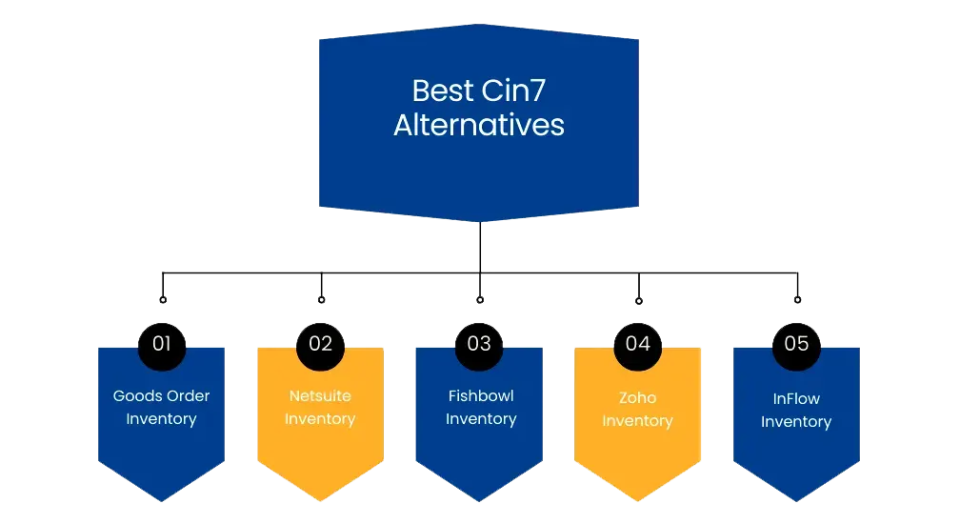
If your company is struggling to scale with the Cin7 inventory management solution and is looking for powerful alternatives, then the following platforms can be considered as strong options.
GOIS: Next-Gen Inventory Management Solutions for Growing Businesses
GOIS is emerging as a powerful Cin7 alternative built specifically for businesses that want deeper operational visibility and smarter inventory control.
Unlike many traditional systems, GOIS focuses on combining automation and operational simplicity to help companies scale their operations without any distortion.
Key capabilities of GOIS:
- Offering real-time inventory tracking across multi-warehouses
- Advanced order and stock visibility
- Automated replenishment and stock alerts
- Intelligent reporting and analytics dashboard with mobile-access
- Warehouse workflow optimization to ensure full utilization of storages
- Synchronizing the multi-channel sales
For businesses managing complex inventory flows, GOIS provides a modern Cin7 replacement that reduces manual processes and automate 30% of inventory operations.
Want to see GOIS in action?
Need more info?
Book a demo or get started with our free plan to explore GOIS features, integrations, and powerful inventory tools. Our experts will guide you through setup and help you scale efficiently.
NetSuite Inventory Management
NetSuite is another powerful alternative to Cin7 that offers a comprehensive ERP system, which includes smart inventory management capabilities. Businesses already planning ERP adoption often consider NetSuite as one of the enterprise-level Cin7 alternatives.
Core features that NetSuite offers:
- Offering global inventory visibility with real-time data updates
- Data-based demand planning and forecasting, and eliminating the assumptions
- Multi-location inventory tracking, where each movement of products is recorded
- Can integrate financial and inventory tools to deliver a consolidated view of inventory
Though NetSuite offers a wide range of features well fitted to modern inventory management needs, but it’s complicated implementation and high cost can make NetSuite better fit to larger enterprises.
Fishbowl Inventory
Fishbowl is widely used by manufacturers and wholesalers looking for a QuickBooks-friendly Cin7 replacement.
Features offered by Fishbowl Inventory
- Manufacturing workflow management
- Inventory tracking and warehouse management
- Order automation and purchasing tools
- Deep QuickBooks integration
Fishbowl works well for companies that require manufacturing and inventory management within the same system.
Zoho Inventory
Zoho Inventory is one of the most powerful Cin7 alternatives. It is a cloud-based inventory management platform popular among small and mid-size businesses seeking lightweight software like Cin7.
Key Features
- Managing multi-channel sales
- Monitoring and tracking orders and shipments
- Triggering inventory alerts and reporting
- Can integrate well with the Zoho ecosystem
It is often chosen by companies that want a simpler system with lower operational complexity.
InFlow Inventory
InFlow Inventory is widely recognized Cin7 inventory management alternative, as it is designed for growing ecommerce and wholesale businesses.
Key capabilities offered by InFlow Inventory
- Barcode inventory tracking
- Offering advanced tools for order management and fulfillment
- Smart dashboard for managing purchasing and suppliers
- Maintaining inventory analytics and reporting
The platform is known for its ease of use and is relatively quick to implement
How to Choose the Best Cin7 Alternatives in 2026
With a plethora of inventory management systems available in the market, selecting the best Cin7 replacement requires a careful evaluation of several factors.
Here’s what you need to evaluate when choosing the best Cin7 alternatives in 2026:
1. Understand Your Inventory Challenges
Every business has its own set of challenges. Make sure you evaluate your inventory requirements and choose a platform that helps manage multiple warehouses, global suppliers, and high SKU volumes should prioritize platforms designed for scalability.
2. Evaluate Automation Possibilities
Look for the inventory management systems that help automate the major tasks like stock alerts, purchase orders, and demand forecasting, and significantly reduce the manual workload.
3. Prioritize Real-Time Visibility of Inventory
Make sure that the system you are choosing updates real-time data across warehouses and sales channels and allows your teams to work with the latest data.
4. Integration Requirements
Companies should ensure their chosen platform integrates smoothly with existing inventory tracking and management tools like sales channels, accounting systems, and logistics software.
5. Consider Long-Term Scalability
The best Cin7 alternatives are platforms that can support scalability. The system should scale as your business grow over the years.
Why GOIS Is Becoming a Preferred Cin7 Alternative
For scaling businesses that want more control, visibility, and automation, GOIS offers several advantages over traditional inventory platforms.
GOIS is designed to focus on solving real-life operational challenges. From fragmented inventory data, slow reporting, to manual stock management, GOIS can help you manage everything from a single platform.
Companies choosing GOIS benefit from:
- Centralized inventory intelligence
- Automating repetitive inventory tasks
- Clear operational insights through advanced analytics
- Simplified inventory workflows across teams
For businesses searching for reliable software like Cin7, GOIS provides a modern platform built to support new-age inventory scaling operations.
Final Words
At the end of this blog, it is fair enough to say that inventory management systems are evolving as businesses are growing. While Cin7 provides a strong starting point, many scaling companies eventually require more flexibility, better performance, and greater operational visibility.
Platforms like GOIS, NetSuite, Fishbowl, Zoho Inventory, and inFlow Inventory each offer different strengths depending on operational needs.
For companies seeking a modern Cin7 inventory management alternative but still not able to make the best decision, they can contact us for the perfect solution and expert guidance.
Frequently Asked Questions (FAQ’s)
Why do businesses look for a Cin7 replacement?
Businesses are often looking for a Cin7 replacement due to limited modern inventory requirements, increasing operational costs, complex system workflows, limited customization, and performance issues when managing large inventory catalogs.
What is the best Cin7 inventory management alternative?
The best Cin7 inventory management alternative depends on business needs. Platforms like GOIS, NetSuite, Fishbowl, Zoho Inventory, and inFlow Inventory offer strong solutions for different operational requirements.
Is there software similar to Cin7 for small businesses?
Yes. Small and mid-size businesses often consider software like Cin7 such as Zoho Inventory or InFlow Inventory because they provide simpler workflows and lower implementation complexity.
How do I choose the right Cin7 alternative?
To choose the right Cin7 alternative, businesses should evaluate scalability, automation features, integration capabilities, real-time inventory visibility, and long-term operational requirements.

Naushad Ahmed 
Naushad Ahmed is a technology expert at Goods Order Inventory (GOIS) specializing in inventory management, order fulfillment, and warehouse operations for small and mid-sized businesses. He shares practical insights on inventory control, stock accuracy, automation, and multi-location management to help businesses move beyond spreadsheets, reduce stockouts and overstock, and scale their operations efficiently.